EXCELLENT Based on 188 reviews
 Posted on Google
 Narelle BallardPleasant experience with a calm and friendly team of professionals. We travel from the Southern Highlands to see Alhan and it is well worth the trip!Posted on Google
 Jessica RStaff were very friendly, professional, efficient and kind! Would highly recommend 🙂Posted on Google
 Natasha DayHad such a great experience at Quay Dental yesterday. Very knowledgeable and friendly staff!Posted on Google
 Sally BriggsI had an amazing experience today at Quay Dental with Dr. Ally and the team! They made me feel so comfortable and at ease, talking me through every step of the appointment to explain the treatment. I’ve already booked my next visit with Dr. Ally. I highly recommend Quay Dental to everyone!Posted on Google
 Joss CunninghamI absolutely love Quay Dental! Dr. Ally and the entire team are incredible, so professional, friendly, and made me feel completely at ease. Every visit is a seamless experience, from the warm welcome at reception to the top-tier care in the chair. Dr. Ally is so knowledgeable and gentle. Already counting down to my next appointment in a month!Posted on Google
 Chelsea McGillivrayErica Kim was excellent and listened to my concerns, even the receptionist was so friendly.Posted on Google
 Jaya DaemionThey always treat you with care and complete long lasting improvements. They will change your life. I would suggest to everyone that needed anything dental. 5 stars.Posted on Google
 Steve SampsonDr Ali is awesome, caring and gentle.Posted on Google
 jyotsna raniWe had a wonderful experience with Dr. Manu. She is incredibly friendly and made my child feel completely at ease during the filling procedure. Their gentle approach and patience made all the difference, turning what could have been a stressful visit into a positive one. Highly recommend for anyone looking for a great, kid-friendly dentist.Verified by TrustindexTrustindex verified badge is the Universal Symbol of Trust. Only the greatest companies can get the verified badge who has a review score above 4.5, based on customer reviews over the past 12 months. Read more

Dental veneers are thin, custom-designed restorations placed over the visible front surfaces of selected teeth. They may be made from porcelain or composite resin and are planned to blend with the surrounding smile. Veneers can improve several cosmetic concerns at once while preserving as much healthy tooth structure as clinically appropriate.
Veneers are mainly used to improve the appearance of teeth affected by stubborn discolouration, minor chips, small gaps, uneven edges or differences in shape and size. They can also create a more balanced-looking smile by improving symmetry between neighbouring teeth. Suitability depends on the health of your teeth, gums and bite.
Quay Dental offers two main veneer materials, with each option providing different advantages:
Veneers may improve both the look of selected teeth and the way a smile feels as a whole. The right treatment can address several small concerns within one coordinated plan, helping create a more consistent result without making every tooth look identical.
Veneers can conceal selected areas of discolouration, minor spacing, small chips and irregular tooth shapes. The colour, width, length and contour of each restoration are planned around your natural teeth and facial features. This helps create a polished result that still feels individual rather than overly bright or artificial.

In addition to changing tooth appearance, veneers may provide limited practical benefits where treatment is clinically suitable:

Porcelain veneers are very thin shells custom-made to fit over the fronts of selected teeth. They may help improve misshapen teeth, deep staining, small cracks, minor chips, gaps or a smile that appears uneven.
Porcelain is non-porous, so it generally resists staining better than composite resin. Its light-reflecting qualities can also resemble natural enamel. The shade, shape and proportions are chosen carefully so the veneers sit comfortably within your existing smile rather than appearing separate from it.

Composite veneers are created by applying tooth-coloured resin directly to the teeth and shaping it to close small spaces, soften uneven edges or disguise minor surface imperfections.
This approach may involve less alteration to natural tooth structure than porcelain veneers or crowns. Composite treatment can also be repaired more easily if a small area becomes damaged. However, the material may stain or wear sooner than porcelain and can require periodic polishing, maintenance or replacement.

When a tooth has been weakened by significant decay, a fracture or a large existing restoration, a veneer may not provide enough protection. In these cases, dental crowns may be more suitable because a crown covers more of the visible tooth.
Modern porcelain crowns can be colour-matched to surrounding teeth, helping restore strength, everyday function and a natural-looking appearance.

Quay Dental follows a careful treatment process so your veneers are planned around your oral health, bite and preferred result.
During your first visit, the dentist will discuss what you would like to improve and examine your teeth, gums and bite. Photographs, digital scans or X-rays may be recommended when additional information is needed.
Existing patients and those completing a new patient form receive recommendations based on their current oral health. If decay, gum inflammation or bite concerns are present, these may need attention before veneer treatment begins.
Porcelain veneer treatment usually starts by preparing the selected teeth. A small amount of enamel may need to be removed so the restorations can sit naturally without looking bulky. Digital scans or impressions are then taken and sent to a dental laboratory, where the veneers are individually made.
Temporary veneers may be placed while the final restorations are being produced. Once ready, each veneer is checked for fit, shape, colour and its relationship with your bite. Adjustments are made where needed before the veneers are bonded securely to the teeth.
Composite veneers follow a different process. The resin is usually applied, sculpted and polished directly during the appointment. The exact treatment time depends on the number of teeth involved and the amount of change required.
After placement, regular brushing, cleaning between the teeth and routine dental visits remain essential. Led by Dr Alhan Farjo, our team will explain how to care for the supporting teeth and gums, which foods or habits may place stress on the veneers and when to return for review.
Veneers can create noticeable improvements in tooth colour, shape, size and visual alignment. Some patients treat one or two teeth, while others include several visible teeth within their smile plan.
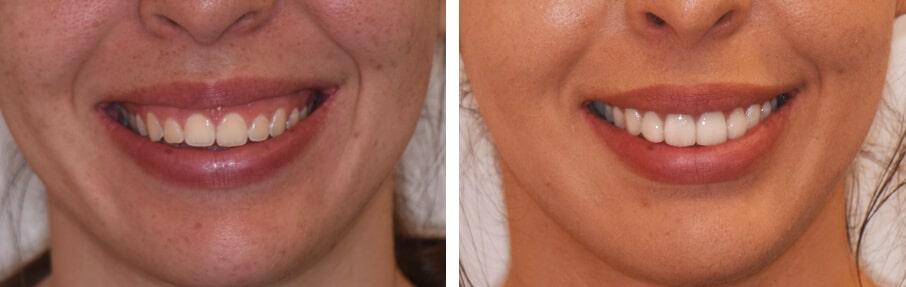
You can view before-and-after examples in our smile gallery to see how cosmetic treatment may change different smiles. Results vary, so your dentist will explain what may realistically be achieved in your individual case.
Daily oral hygiene, gum health and regular professional care all influence how well veneers perform. Grinding or clenching, also known as bruxism, can place additional pressure on restorations.
Chewing hard objects or using your teeth to open packaging may also cause chips or fractures. Diet, smoking and strongly staining foods or drinks may affect the appearance of composite veneers over time.

Veneers are one of several treatments that may improve the appearance of teeth. Understanding how they differ from crowns and dental bonding can help you make a more informed decision.
A veneer mainly covers the front surface of a tooth and is generally considered when the tooth remains reasonably strong, and the concern is mostly cosmetic.
A crown covers considerably more tooth structure and may be recommended when a tooth needs additional protection. Dental Crowns may therefore be more appropriate for teeth affected by fractures, extensive decay or large restorations.
Dental bonding uses tooth-coloured resin applied directly to the tooth to improve small chips, gaps or uneven edges. It is generally more affordable and may require less preparation than porcelain veneers.
Porcelain usually provides greater stain resistance and may last longer, while bonding can be easier to repair. The right option depends on your teeth, bite, goals and preferred budget.

Our team of professional dentists and assistants work to give each and every one of our patients a positive, comfortable, and relaxed experience while maintaining the highest standards of care. We are constantly working to stay up to date on all of the latest in dental care. From technology to techniques, we are here for you with the best methods and procedures for your needs.
The cost of veneers varies because every treatment plan is different. The final amount may depend on how many teeth are being treated, whether porcelain or composite is selected and how complex the planned changes are.
During your consultation, our team will assess your smile and provide a personalised treatment plan with a clear cost breakdown. You will have time to review the proposed care and ask questions before deciding whether to proceed.

Veneers may suit people with healthy teeth and gums who want to improve selected cosmetic concerns. They may not be recommended where there is active decay, significant gum disease, very limited enamel or severe grinding. Your dentist will assess your mouth and explain whether veneers or another treatment would provide a safer, more predictable result.
Patients considering veneers Willoughby receive advice based on their teeth, bite, oral health and preferred result. Our team uses modern planning methods and takes time to explain the benefits, limitations and maintenance needs of each option. Treatment is designed to create a balanced result without placing appearance ahead of long-term dental health.
or call 02-9241-2038. During your consultation, the dentist will examine your teeth, explain suitable options and provide a personalised plan based on the changes you would like to make.